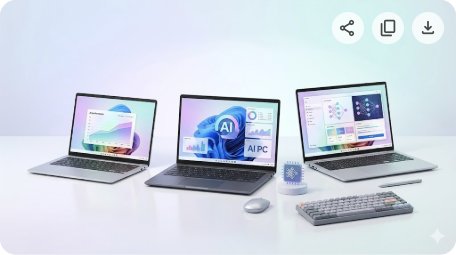
The Dawn of a New Computing Age: AI PCs Have Arrived
For decades, the personal computer has been defined by a relentless pursuit of speed. Megahertz, gigahertz, core counts, and teraflops have been the yardsticks by which we measure progress. But today, the landscape of personal computing is undergoing its most significant transformation in a generation. The era of the AI PC is here, and it’s not just about doing the same things faster; it’s about doing entirely new things. This revolution is powered by a new kind of processor, the Neural Processing Unit (NPU), a dedicated engine for artificial intelligence. Microsoft has christened this new wave of intelligent machines \”Copilot+ PCs,\” and two titans of the tech world are leading the charge with distinctly different philosophies: Samsung, with its ARM-based Galaxy Book4 Edge, and LG, with its Intel-powered Gram Pro.
This isn’t just another spec bump. It’s a fundamental reimagining of what a laptop can be. A Copilot+ PC is required to have an NPU capable of at least 40 Trillion Operations Per Second (TOPS), along with a minimum of 16GB of RAM. This isn’t arbitrary; this raw power is the key to unlocking features that feel like science fiction. Imagine your PC understanding and transcribing your speech in real-time, translating any audio into your native language instantly, or allowing you to search for anything you’ve ever seen on your screen using natural language. This is the promise of Copilot+ features like Recall, Live Captions, and advanced creative tool integrations. It’s a future where your computer anticipates your needs, streamlines your workflow, and breaks down communication barriers. In this in-depth analysis, we will dissect two of the first and most compelling Copilot+ PCs to hit the market: the Samsung Galaxy Book4 Edge and the LG Gram Pro. One is a bold step into the ARM-based future with Qualcomm’s Snapdragon X Elite, while the other represents the powerful evolution of the classic Intel x86 architecture. Which one is the true harbinger of the AI PC era? Let’s find out.
Contender #1: Samsung Galaxy Book4 Edge – The ARM Challenger with a Dazzling Display
Samsung has never been shy about leveraging its vertical integration, and the Galaxy Book4 Edge is a testament to this strategy. It’s a device that feels meticulously crafted, from the silicon beating at its heart to the stunning photons emanating from its screen. It’s Samsung’s bold statement that the future of Windows laptops is on ARM.
Design and Display: A Visual Masterpiece
True to Samsung’s design language, the Galaxy Book4 Edge is a sleek, minimalist slab of aluminum. It’s incredibly thin and light, exuding a premium feel that rivals any high-end laptop on the market. But the moment you open the lid, the chassis almost disappears, completely overshadowed by the display. Samsung has equipped the Edge with its signature Dynamic AMOLED 2X panel, and it is nothing short of breathtaking. With resolutions up to 3K and a smooth 120Hz refresh rate, it delivers the inky blacks, infinite contrast, and vibrant, punchy colors that only OLED technology can. For content creators, media consumers, or anyone who appreciates a truly spectacular screen, the Galaxy Book4 Edge immediately presents a compelling argument. It makes everything from editing photos to watching movies an immersive, visually rich experience.
The Snapdragon X Elite Heart: A New Beat for Windows
Under the hood lies the real story: the Qualcomm Snapdragon X Elite processor. This isn’t the first time Windows has run on an ARM chip, but the X Elite represents a quantum leap in performance and efficiency. Built on a mobile-first architecture, its primary advantage is phenomenal power-per-watt. This translates to two key benefits: sustained performance without thermal throttling and, most importantly, extraordinary battery life. The Snapdragon X Elite in the Book4 Edge packs a formidable 45 TOPS NPU, comfortably exceeding the Copilot+ requirement and providing a massive runway for current and future AI experiences. The architecture is designed to handle AI workloads efficiently on-device, meaning faster, more secure, and more private AI interactions that don’t always need to ping a cloud server.
The Galaxy AI Ecosystem: Smarter Together
Samsung’s true ace in the hole isn’t just the hardware; it’s the software ecosystem. The Galaxy Book4 Edge comes deeply integrated with Galaxy AI, the same suite of intelligent features found on its flagship smartphones. This creates a seamless, powerful synergy. Imagine using Circle to Search on a product in a YouTube video on your laptop, or having a conversation with a foreign colleague on a video call with Live Translate running natively. For users already invested in the Samsung Galaxy ecosystem, the Book4 Edge isn’t just a new laptop; it’s the brain that connects all their devices, making the entire experience smarter. This level of integration is a powerful moat that other manufacturers will find difficult to replicate.
Contender #2: LG Gram Pro – The Featherweight Intel Champion
For years, the LG Gram has been the undisputed king of ultralight laptops, a marvel of engineering that consistently defies expectations of how light a full-featured notebook can be. With the new Gram Pro, LG isn’t just resting on its lightweight laurels. It’s embracing the AI PC era by partnering with Intel to deliver a machine that is both incredibly portable and exceptionally intelligent.
Design and Portability: The Unbeatable Lightweight
Picking up the LG Gram Pro is an experience in itself. It feels almost impossibly light, a testament to its magnesium alloy construction. This has always been the Gram’s signature feature, and the Pro model continues this legacy. For the road warrior, the student running between classes, or anyone who values mobility above all else, the Gram Pro is in a class of its own. It’s a full-sized, powerful laptop that you can genuinely forget is in your backpack. LG proves that you don’t have to sacrifice screen size or performance for ultimate portability.
The Intel Core Ultra Evolution: x86 Strikes Back
At the heart of the LG Gram Pro is the latest Intel Core Ultra (Series 2) processor. This is Intel’s powerful answer to the ARM challenge. These chips represent a new direction for Intel, featuring a triple-decker architecture with CPU cores for performance, GPU cores for graphics, and, crucially, a powerful new NPU. The NPU in the Core Ultra 9 variant boasts up to 48 TOPS, making it a certified Copilot+ powerhouse. This allows the Gram Pro to run all the same advanced AI features as its ARM-based rival, but with the full, uncompromised compatibility and legacy support of the x86 architecture that has dominated computing for decades. For users who rely on specific applications or peripherals that might have issues with ARM emulation, the Intel-powered Gram Pro offers peace of mind.
Display and AI Extras: Smoothness and Smarts
While not the OLED panel of the Samsung, the LG Gram Pro’s display is a performer in its own right. It features a high-resolution 16:10 IPS screen with excellent color accuracy. Its secret weapon, however, is the 144Hz variable refresh rate. This makes every interaction, from simple web scrolling to fast-paced gaming, feel incredibly fluid and responsive. For users sensitive to motion clarity, the high-refresh-rate panel is a significant advantage. On the software front, LG complements Microsoft’s Copilot+ suite with its own ‘LG Gram Link’ and ‘gram AI’ applications. These tools are designed to streamline device connectivity and offer on-device assistance, adding another layer of intelligence to the user experience.
Head-to-Head: The Ultimate AI PC Showdown
With both laptops bringing impressive credentials to the table, let’s break down the key differences in a direct comparison.
The Great Processor Debate: Snapdragon X Elite vs. Intel Core Ultra
This is the most fundamental difference and the core of the decision-making process. The Galaxy Book4 Edge’s Snapdragon X Elite (ARM) is built for marathon-like efficiency. It promises multi-day battery life and cool, quiet operation even under load. The trade-off is that it relies on emulation (the ‘Prism’ layer) to run older Windows applications not compiled for ARM, which can sometimes result in minor performance hits or compatibility issues. In contrast, the LG Gram Pro’s Intel Core Ultra (x86) offers rock-solid compatibility with the entire universe of Windows software out of the box. While its efficiency has improved dramatically, it likely won’t match the sheer longevity of the Snapdragon chip. The choice is between the potentially revolutionary efficiency of ARM and the proven, reliable compatibility of x86.
Display Duel: AMOLED Brilliance vs. 144Hz Fluidity
Here, the choice is based on personal priority. The Samsung Galaxy Book4 Edge’s AMOLED screen is the undisputed champion for media. The pure blacks, vibrant colors, and incredible contrast make movies, photos, and games look stunning. It’s a feast for the eyes. The LG Gram Pro’s 144Hz IPS display, however, is the winner for motion clarity. The smoothness it provides during everyday tasks like scrolling and window management is a quality-of-life improvement that is hard to go back from once experienced. It’s a choice between visual fidelity and fluid motion.
Verdict Table
| Feature | Samsung Galaxy Book4 Edge | LG Gram Pro |
|---|---|---|
| Processor | Snapdragon X Elite (ARM) | Intel Core Ultra Series 2 (x86) |
| NPU Performance | 45 TOPS | Up to 48 TOPS |
| Display | Dynamic AMOLED 2X (Up to 3K, 120Hz) | IPS LCD (Up to WQXGA, 144Hz VRR) |
| Key Selling Point | Screen Quality & Battery Life | Extreme Portability & Smoothness |
| AI Ecosystem | Copilot+ with Galaxy AI Integration | Copilot+ with LG gram AI |
| Architecture | ARM64 | x86-64 |
Who Should Buy What?
After a thorough analysis, the choice becomes clearer when framed by user priorities.
Choose the Samsung Galaxy Book4 Edge if:
- You are already invested in the Samsung Galaxy ecosystem. The seamless phone-to-PC integration is a killer feature.
- Your priority is media consumption and content creation. The AMOLED display is simply the best in the business for this.
- You crave the longest possible battery life and are willing to embrace the new ARM architecture for its efficiency benefits.
Choose the LG Gram Pro if:
- You are a true road warrior. Its impossibly lightweight design makes it the ultimate travel companion.
- You value smooth, fluid motion in your everyday computer interactions or light gaming. The 144Hz display is a game-changer.
- You need guaranteed, no-fuss compatibility with older or specialized Windows software and prefer the maturity of the Intel x86 platform.
Conclusion: A New Era, Two Excellent Choices
The launch of Copilot+ PCs marks a genuine inflection point for the industry. The Samsung Galaxy Book4 Edge and the LG Gram Pro are not just excellent laptops; they are pioneers of this new, intelligent era. They prove that the future of computing is not just about raw power, but about how that power is applied to make our lives easier, more productive, and more connected. Samsung offers a bold vision of an ARM-powered future, wrapped in a visually stunning package with deep ecosystem hooks. LG, on the other hand, perfects the traditional ultrabook formula, infusing it with next-generation Intel AI power while retaining its legendary portability. There is no single winner here, because the real winner is the consumer. The AI PC era has truly begun, and with two such compellingly different yet equally brilliant options, the future looks very bright indeed.
#AIPC #CopilotPlus #Samsung #GalaxyBook4Edge #LG #LGGramPro #TechReview #Laptop #SnapdragonXElite #IntelCoreUltra
이 글은 2026년 3월 기준으로 작성되었으며 주기적으로 업데이트됩니다.